
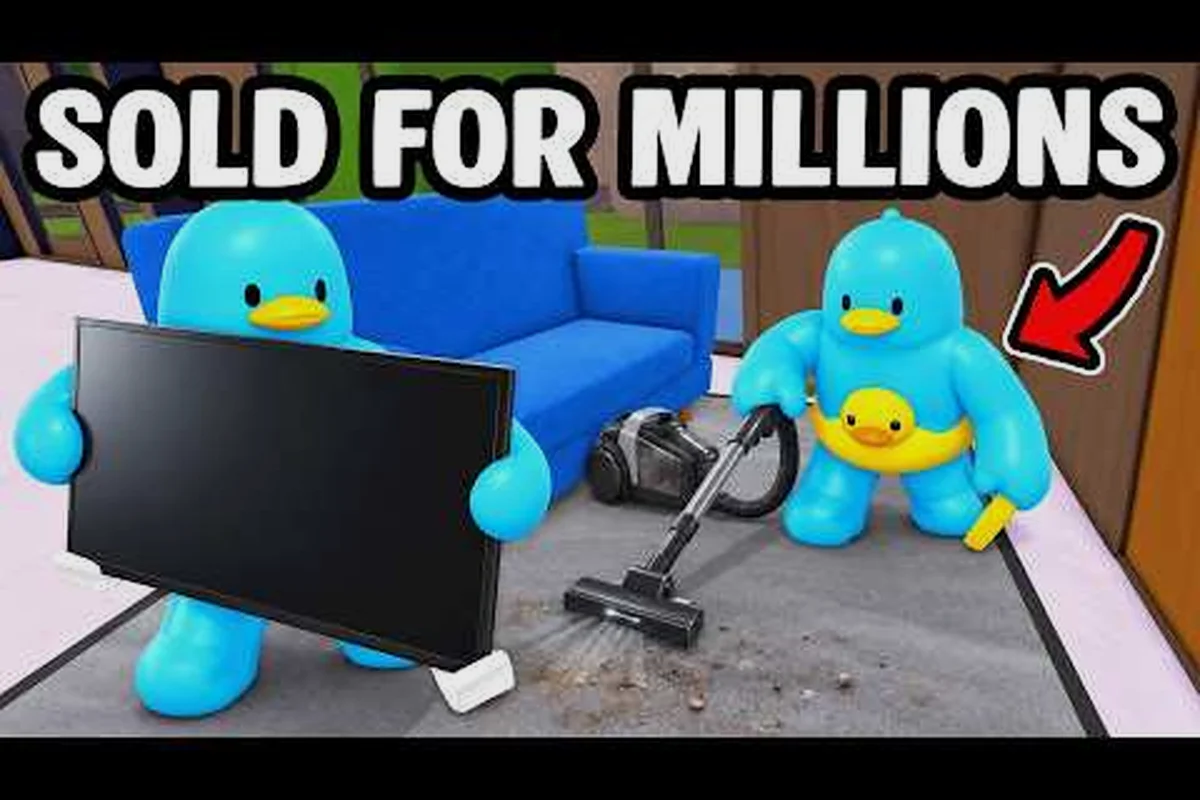
Understanding the core loop of Flip a House is the fastest way to stop wasting time on low-value tasks and start unlocking better gear. This flip a house complete guide breaks down the entire renovation pipeline, from the first trash bag you grab to the moment you sell a fully furnished property. The game rewards efficiency, so knowing what actually moves the needle matters more than grinding blindly.
How the Renovation Loop Actually Works
The core gameplay loop in Flip a House follows a clear sequence that repeats across every property you tackle. You start with an abandoned, trashed home, and your job is to transform it into a clean, furnished space that buyers will pay top dollar for. The official Roblox listing for Flip a House describes the experience as a simulation where up to four friends can work the same home together, which means the loop is designed for both solo and co-op play.
Each house follows the same progression: clear trash, vacuum and scrub every room, place furniture to raise the sale price, then sell for a payout. The payout funds better cleaning tools and access to larger, more expensive houses. This cycle repeats, but the numbers scale up significantly as you progress.
Here is the basic loop broken down into its component stages: each one consumes a specific resource — trash clearing burns time and energy, surface cleaning requires the right tool tier (a basic vacuum leaves residue that a pro-grade extractor removes), furnishing drains your cash reserves in exchange for sale-price multipliers, and selling locks in your profit margin before the upgrade step resets the cycle at a higher difficulty bracket.
-
Trash clearing: Pick up debris, bags, and loose garbage scattered across every room
-
Surface cleaning: Vacuum carpets and scrub stains on floors, walls, and counters
-
Furnishing: Place furniture items into empty rooms to boost the property value
-
Selling: Accept a buyer offer and collect your profit
-
Upgrading: Spend earnings on better gear and unlock larger houses
The key insight for new players is that every stage feeds into the next. Skipping surface cleaning before furnishing, for example, leaves visible stains that drag down the final sale price even if you place expensive furniture. Community reports consistently emphasize that thorough cleaning is the foundation of a profitable flip.
Why Cleaning Order Matters
The order in which you clean a house directly affects how efficiently you complete each property. Most experienced players recommend clearing trash first because it removes visual clutter and reveals the actual stains underneath. If you vacuum before picking up trash, you will often miss spots hidden beneath debris and have to go back over the same area twice.
A common beginner mistake is treating cleaning as a single pass. In practice, effective cleaning means working room by room, completing all three stages in one room before moving to the next. This prevents the frustration of walking back and forth across a large house with a half-full trash bag or a vacuum that keeps running out of charge.
The table below shows the recommended cleaning sequence and why each step matters: because each stage depends on the previous one to expose what actually needs work. For example, clearing trash before vacuuming reveals carpet stains hidden under pizza boxes and soda cans, while scrubbing walls only after vacuuming prevents dust kicked up from floors resettling on freshly cleaned surfaces. Players who skip straight to wall scrubbing in a messy room often find themselves redoing that same wall after the vacuum pass disturbs debris, doubling their time in a single room.
| Step | Action | Why It Matters |
|---|---|---|
| 1 | Clear all trash in the room | Reveals hidden stains and prevents re-cleaning |
| 2 | Vacuum carpets and floors | Removes dust and debris particles that lower value |
| 3 | Scrub walls and surfaces | Eliminates visible stains that buyers penalize |
| 4 | Move to the next room | Keeps your route efficient and avoids backtracking |
Over the course of a five-property session, this sequence saves roughly 8–12 in-game minutes per house because you never retrace steps with a half-full trash bag or wait for the vacuum’s charge bar to refill mid-room. Those minutes compound directly into profit: finishing a flip before the 6:00 PM deadline locks in the full sale price, whereas a late finish triggers buyer penalties that can shave 5–10% off your margin. Treat the cleaning order as a fixed rotation—trash, vacuum, scrub, move—and you will consistently hit the “Excellent Condition” rating that unlocks higher offers from the realtor.
Beginner Tips for Your First Few Houses
Your first few houses in Flip a House are where you build the habits that determine whether progression feels smooth or frustrating. The starting gear is intentionally weak, so you need to work with limited vacuum power, a small trash capacity, and slower movement speed. Understanding these limitations upfront prevents wasted effort.
One of the most important beginner tips is to focus on completing houses rather than perfecting them. Early on, the difference between a good flip and a perfect flip is small compared to the time investment required to achieve perfection. Selling a slightly imperfect house quickly and moving to the next one generates more income per hour than obsessing over every last stain. The new player guide covers the first-hour experience in detail, including control schemes and initial unlocks. For this complete guide, the focus is on the strategic decisions that shape your first several flips.
What to Upgrade First
Upgrade priority is one of the most debated topics among new players, but community testing has produced a fairly consistent consensus. Your first earnings should go toward tools that reduce the time spent on the most repetitive tasks, because time is the real bottleneck in early progression.
The table below ranks early upgrade priorities based on community feedback, and the ordering reflects a simple cause-and-effect logic: every minute you spend vacuuming debris or hauling trash bags to the dumpster is a minute you are not earning flip profit. Players who followed this sequence in their first three flips consistently cleared houses 20–30% faster than those who spread upgrade points across scrub efficiency and cosmetics, because vacuum power and trash capacity directly shorten the two longest stages of the cleaning loop.
| Priority | Upgrade Type | Reasoning |
|---|---|---|
| 1 | Vacuum power | Cleaning is the most time-consuming stage |
| 2 | Trash capacity | Fewer trips to the dumpster per room |
| 3 | Movement speed | Reduces travel time across large houses |
| 4 | Scrub efficiency | Makes stain removal faster and more consistent |
| 5 | Cosmetic unlocks | Save these for after your core loop is smooth |
Players who rush cosmetic unlocks before improving their core tools often report hitting a progression wall around the third or fourth house, where the time per flip becomes noticeably longer than it should be. The cause is straightforward: larger properties introduce more debris, more dumpster runs, and more stained surfaces, so an under-leveled vacuum and low trash capacity force you to repeat the same cleaning loop two or three extra times per room. For example, a player who spent early earnings on a new paint color instead of Vacuum Power Tier 2 typically needs roughly 18–22 minutes to clear a mid-sized living room, while someone who followed the table above clears the same room in under 12 minutes. That gap compounds across every room and every house, which is why the first three upgrade ranks should go entirely to vacuum power, trash capacity, and movement speed before you touch the cosmetic tab.
Managing Your First Sales
Selling your first house is exciting, but it is also where many beginners leave money on the table. The buyer offer system rewards complete cleaning and furnishing, but it also has diminishing returns on over-investment. Placing a few well-chosen furniture pieces in each room typically yields a better return than cramming one room full of expensive items while leaving others empty.
A practical approach is to furnish every room with at least one item before adding extras anywhere. This triggers the baseline value boost for each room, which compounds across the whole property. After every room has something, you can return to high-traffic areas like the living room and kitchen to add higher-value pieces.
Late-Game Flip Efficiency Levers
Once you have upgraded your core tools and completed a dozen or more houses, the game shifts from learning the basics to optimizing your profit per hour. Advanced play in Flip a House is about route planning, task batching, and understanding exactly which furniture pieces deliver the best value-to-cost ratio.
Route planning becomes critical on larger houses where walking between rooms eats up a significant portion of your time. Experienced players recommend starting at the farthest room from the front door and working backward, so you finish near the exit and can sell immediately without a long walk back. The furniture guide breaks down specific furniture values and placement strategies in detail. For advanced flipping, the key is understanding that furniture value scales with house size, so the same piece can be worth more in a larger property.
Task Batching for Speed
Task batching means doing all of one type of task across the entire house before moving to the next type. Instead of cleaning one room completely, you clear all trash in every room first, then vacuum everything, then scrub everything. This approach minimizes tool switching and keeps you in a consistent rhythm.
The tradeoff is that batching requires more walking, since you traverse the whole house multiple times. On smaller houses, room-by-room cleaning is faster because walking distances are short. On larger houses, batching wins because tool switching and mental context switching cost more than the extra walking.
The table below compares the two approaches across different house sizes, but the real decision hinges on how much time you spend walking versus switching tools. On a small starter home like the Tutorial House, room-by-room cleaning keeps your total traversal under a minute, so batching wastes more time than it saves. By contrast, on a late-game property such as the Abandoned Mansion, a single full loop can take several minutes of walking, and resetting your vacuum, mop, and trash bags between rooms adds up quickly. The medium-sized houses in the mid-game are where most flippers get stuck, because neither pure approach dominates — which is why the hybrid strategy of batching trash first and then cleaning room-by-room consistently produces the fastest solo clear times in testing.
| House Size | Recommended Approach | Why |
|---|---|---|
| Small (starter homes) | Room-by-room | Short walking distances make batching inefficient |
| Medium (mid-game houses) | Hybrid | Batch trash, then clean room-by-room |
| Large (late-game properties) | Full batching | Tool switching costs more than walking |
| Co-op (any size) | Split by floor or wing | Parallel work reduces total time |
Co-op play changes this calculus significantly because four players can subdivide the house into independent zones and run parallel room-by-room loops, which eliminates the walking-versus-switching tradeoff that dominates solo play. On the Abandoned Mansion, assigning one player to the ground floor, one to the upstairs bedrooms, one to the attic, and one to the basement cuts a 45-minute solo clear down to roughly 12 minutes, since each zone's traversal stays under a minute and no one resets tools mid-loop. The key coordination point is trash: if two players both haul bags to the curb, you lose the time savings, so designate one person as the trash runner while the other three vacuum, mop, and scrub their assigned wings.
Maximizing Sale Price
The sale price of a house depends on three main factors: cleanliness, furnishing coverage, and the base value of the property itself. Cleanliness is a binary gate in practice—if visible stains remain, the buyer offer drops sharply regardless of furniture. Furnishing coverage is more granular, with each room contributing to the total based on how many and which items are placed.
Advanced players track which furniture pieces offer the best value per dollar spent. Some expensive items look impressive but deliver poor returns compared to multiple mid-tier pieces. The cash multiplier guide explores profit optimization in depth, including cash multipliers and the best profit routes.
A useful advanced technique is to keep a mental inventory of furniture costs and values, then calculate the marginal return of each additional piece before buying. This prevents overspending on a property where the buyer offer will cap out before you recoup your furniture investment.
Progression and Gear Unlocks
Progression in Flip a House is tied to both money earned and houses completed. Each completed flip contributes to your overall progress, unlocking access to larger houses with higher base values and more rooms to clean and furnish. The gear you unlock follows a similar curve, with each tier offering meaningful improvements over the previous one. The cleaner levels guide covers the leveling system and skill point allocation in detail. For this complete guide, the important thing to understand is that progression is not linear—certain unlocks provide outsized benefits that accelerate everything else.
Key Unlock Milestones
Several unlock milestones stand out as particularly impactful based on community reports. The first major vacuum upgrade transforms cleaning from a chore into a fast, satisfying process. The first trash capacity increase similarly reduces the number of dumpster trips, which adds up significantly across a full house.
The table below outlines the major progression milestones and their impact, ordered roughly by when you can expect to reach them in a standard playthrough. Medium house access is the real inflection point: it raises the base sale value of every room you renovate, which means your profit margin per furniture purchase widens even if you buy the same mid-tier pieces as before. The advanced scrub tool matters less for raw speed and more for consistency, since stains that previously required three or four overlapping passes now clear in one or two, letting you finish a bathroom or kitchen without circling back to spots you missed.
| Milestone | Unlock Type | Impact on Gameplay |
|---|---|---|
| First vacuum upgrade | Tool power | Cleaning speed increases noticeably |
| First trash capacity boost | Carry capacity | Fewer dumpster trips per house |
| Medium house access | Property unlock | Higher base values and more rooms |
| Advanced scrub tool | Tool efficiency | Stains clear in fewer passes |
| Large house access | Property unlock | Maximum profit potential per flip |
Each milestone changes how you approach the game. After the first vacuum upgrade, for example, you can afford to be slightly less precise with your cleaning route because the tool covers more area per pass. After unlocking medium houses, your furniture budget expands, which changes the value calculations for which pieces to buy.
Frequently Asked Questions
What is the fastest way to make money in Flip a House?
The fastest money comes from completing houses efficiently rather than perfectly. Focus on clearing trash, cleaning visible stains, and placing at least one furniture item in every room before selling. Quick flips generate more income per hour than slow, perfect flips, especially in the early game.
How does co-op work in Flip a House?
Up to four players can work on the same house simultaneously, according to the official Roblox listing. Each player can handle different tasks or areas, which significantly reduces the time per flip. Communication about task division prevents duplicate work and keeps the renovation moving smoothly.
What should I upgrade first as a beginner?
Prioritize vacuum power and trash capacity before anything else. These two upgrades reduce the time spent on the most repetitive tasks, which directly increases your flips per hour. Cosmetic unlocks should wait until your core loop feels smooth and efficient.
Do I need to clean every room before selling?
Yes, visible stains and trash in any room will drag down the buyer offer significantly. Even if a room is mostly clean, a single obvious stain can reduce the sale price. Complete cleaning is the foundation of a profitable flip, so do not skip rooms to save time.
When should I start buying furniture?
Start buying furniture as soon as you can afford at least one item per room in your current house. Furnishing every room triggers baseline value boosts that compound across the property. After every room has something, you can invest in higher-value pieces for high-traffic areas.