
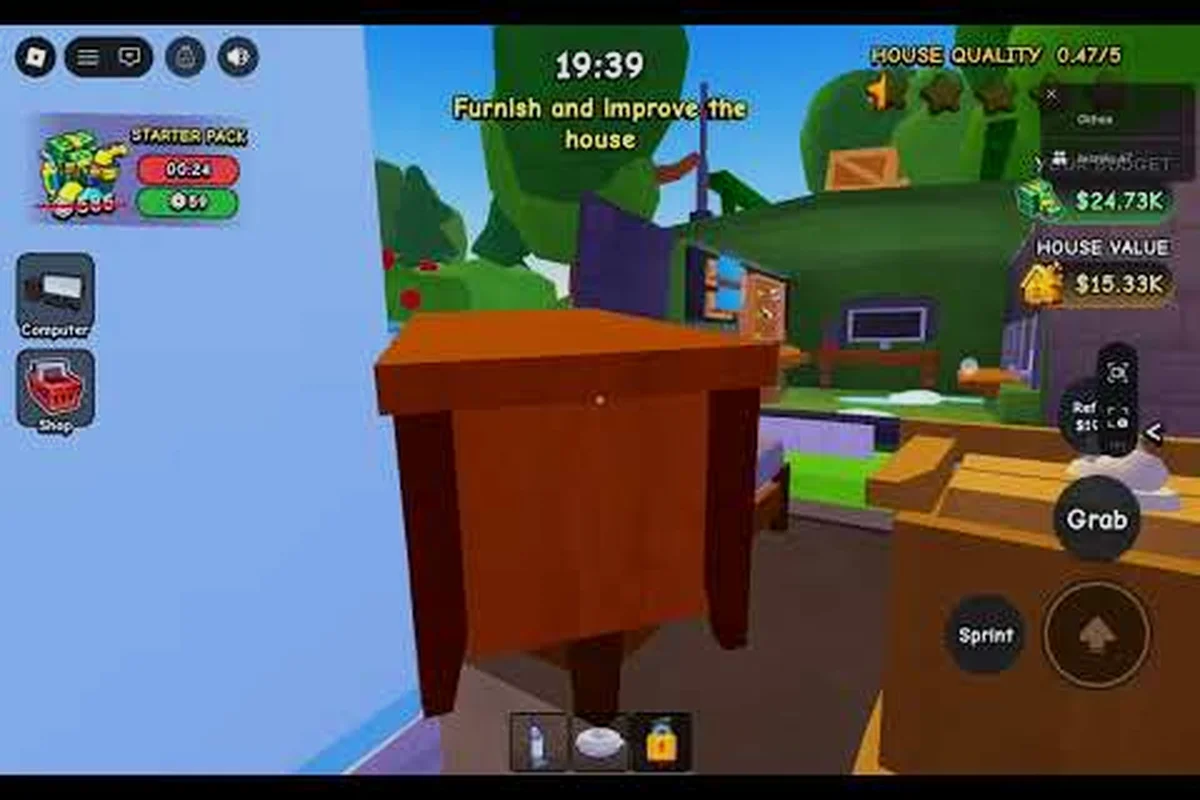
Most new flippers burn their first few thousand dollars on gear that does not pay for itself, then wonder why the next unlock feels so far away. The real decision in Flip a House is not whether to spend, but where: cash upgrades make each house faster, while player levels gate which houses and tools you can even touch. Understanding the flip a house upgrades vs levels split changes how you budget every single job.
A casual follow-up clip from the same channel works through a second property, which is a fair illustration of how the unlock gates shape what you can realistically clear at each stage.
The Core Split Between Upgrades and Levels
In Flip a House, upgrades and levels solve two different problems, and confusing them is the fastest way to stall your progression. Upgrades are purchased with cash and improve the tools you already own, such as a better vacuum or a faster scrubber. Levels are earned through experience and unlock entirely new houses, higher-tier tools, and better buyer pools. A player can have a fully upgraded starter vacuum at level 3 and still be locked out of the houses that actually pay well.
The game's progression system treats these as parallel tracks. Your cleaner level rises as you complete cleaning tasks, trash removal, and furniture placement across any house. Your tool tier rises only when you spend money in the upgrade shop. Because both systems consume different resources, the optimal path is to advance them together rather than maxing one while ignoring the other.
| System | Currency | What It Unlocks | Resets? |
|---|---|---|---|
| Player Level | XP from cleaning and selling | New houses, buyer tiers, tool availability | Never |
| Tool Upgrades | Cash from house sales | Faster cleaning, higher quality results | Never |
| House Quality | Cleaning thoroughness | Higher buyer offers | Per house |
| Buyer Luck | Game Pass or upgrades | Better offer rolls | Varies |
The flip a house level gate is the most misunderstood part of this system. Many players assume that buying the best available vacuum will let them tackle expensive houses early. In practice, the level gate blocks access to those houses entirely until you hit the required cleaner level, regardless of how much cash you have saved. This means cash cannot buy progression, only efficiency within the content you have already unlocked.
How the Leveling Curve Actually Works
The flip a house leveling curve is not linear. Early levels arrive quickly because starter houses are small and the XP requirements are low. Around level 6, the curve steepens noticeably, and by level 13, each level demands substantially more completed houses than the previous tier. Players who do not plan for this curve often hit a wall where they are repeating the same mid-tier house ten or more times just to unlock the next tool bracket.
Community testing suggests that the flip a house xp per house value scales with house size and the number of tasks completed, not with the sale price. A large house with many trash piles, stains, and furniture slots awards more XP than a small house that sells for the same amount. This creates an important strategic choice: sometimes a slightly lower-paying house with more cleaning tasks is better for leveling than a high-ticket house that is mostly empty.
| Level Range | Approximate Houses Per Level | Main Unlock |
|---|---|---|
| 1–5 | 1–3 houses | Basic tools, first buyer types |
| 6–12 | 4–8 houses | Mid-tier vacuums, larger houses |
| 13–17 | 8–15 houses | High-tier scrubbers, premium buyers |
| 18–22 | 15–25 houses | End-game tools, best houses |
| 23+ | 25+ houses | Max efficiency content |
The flip a house best house for xp question has a clear community answer: the largest house you can reliably complete without wasting time on backtracking. Players report that a medium-large house with clustered rooms and a high task density beats a sprawling mansion with long walks between objectives. The key metric is tasks completed per minute, not raw house value.
When Upgrades Beat Levels
There are specific moments where spending cash on an upgrade delivers more value than grinding another level. The first is when your current vacuum or scrubber is the bottleneck. If you are spending more than a few seconds per stain because your tool is under-tiered, an upgrade pays for itself within a handful of houses through faster completion times. The second is when you are one or two levels away from a new house tier and need to squeeze more XP per hour out of your current rotation.
A Pro Vacuum at the right moment can cut cleaning time by a noticeable margin, which compounds across every house you flip that session. Because XP is tied to task completion, a faster tool directly accelerates your leveling speed. This is the hidden synergy most guides miss: upgrades do not just make you money, they make you XP.
| Upgrade | Effect | Best Time to Buy |
|---|---|---|
| Pro Vacuum | Faster dirt pickup | When stains are your main time sink |
| Turbo Vacuum | Major speed boost | Before grinding levels 9–13 |
| Plasma Vacuum | High-end cleaning speed | When flipping large houses repeatedly |
| Scrub Sponge | Faster stain removal | When stains outnumber trash piles |
| Industrial Scrubber | End-game stain clearing | Before tackling premium houses |
The flip a house how to skip levels question comes up constantly, and the honest answer is that you cannot skip levels entirely. What you can do is skip inefficient grinding by choosing the right houses and keeping your tools at the correct tier. Players who try to save cash by never upgrading end up taking twice as long per house, which means they level slower overall. The upgrade is not a shortcut around the level gate; it is the engine that makes the level grind bearable.
When Levels Beat Upgrades
Levels matter more than upgrades whenever a new house tier or buyer pool is on the horizon. A new house tier typically raises both the sale price ceiling and the XP per completion, which means every subsequent hour of play becomes more productive. If you are close to a level threshold, it is often better to push through with your current tools than to spend cash on an upgrade that will be obsolete in a few levels.
The flip a house level gate also controls which tools appear in the shop. You cannot buy a Royal Vacuum at level 5 no matter how much cash you have, because the shop simply does not offer it until you reach the required cleaner level. This means leveling is the true unlock mechanism, while cash only lets you purchase what the level gate has already revealed.
| Priority | Situation | Action |
|---|---|---|
| 1 | Within 1 level of a new house tier | Grind XP, skip upgrades |
| 2 | Tool is the clear bottleneck | Buy the next tool upgrade |
| 3 | Cash is piling up with nothing to buy | Level up to unlock better shop stock |
| 4 | New house tier just unlocked | Upgrade tools to match the new house size |
| 5 | Stuck on a slow house rotation | Re-evaluate house choice, not just tools |
The leveling guide breaks down the exact XP thresholds and reward tiers for each cleaner level, which is useful when you are deciding whether to push for the next unlock or invest in your current setup. The short version: levels unlock potential, upgrades realize it.
Building a Balanced Progression Plan
The most efficient players treat upgrades and levels as a single system rather than competing priorities. A practical approach is to set a tool parity rule: your vacuum and scrubber should always be within one tier of the houses you are flipping. If you are flipping mid-tier houses with a starter vacuum, you are leaving both cash and XP on the table. If you are flipping starter houses with a maxed vacuum, you wasted money on power you cannot use yet.
The flip a house upgrades vs levels decision becomes much easier when you track two numbers: your current XP per house and your average completion time. If completion time is high, upgrades are the answer. If XP per house is low, you need a better house, which means leveling. Most players need to alternate between these two fixes every few levels.
| Stage | Focus | Why |
|---|---|---|
| Levels 1–5 | Learn the loop, buy first upgrades | Cheap tools, fast XP |
| Levels 6–12 | Balance upgrades and house choice | Curve steepens, efficiency matters |
| Levels 13–17 | Prioritize leveling, upgrade only bottlenecks | Big unlocks ahead |
| Levels 18–22 | Max tools, optimize house rotation | End-game efficiency |
| Levels 23+ | Refine buyer strategy, perfect routes | Diminishing returns on tools |
The money per hour guide shows how tool upgrades and house choice combine to affect your cash flow, which is the other half of the progression equation. Cash and XP are not separate goals; a faster house makes more money and more XP at the same time.
Frequently Asked Questions
Is it better to upgrade tools or save for better houses?
Upgrade tools when your current vacuum or scrubber is slowing down every house you flip. Save for better houses when your tools are already adequate and the level gate is the only thing blocking you. The two decisions solve different problems, so alternate based on which bottleneck you are actually hitting.
Can I skip levels by buying expensive upgrades?
No. The flip a house level gate prevents you from accessing higher-tier houses and tools until you reach the required cleaner level. Cash cannot bypass this gate. What upgrades do is make the leveling process faster by reducing the time each house takes, which indirectly speeds up your progression.
What is the best house for XP in Flip a House?
The best house for XP is the largest one you can complete quickly without long walks between rooms. Community testing shows that task density matters more than raw sale price. A medium-large house with clustered rooms and many cleaning tasks often beats a sprawling mansion for XP per hour.
How many houses does it take to level up?
The flip a house leveling curve means early levels take only one to three houses, while later levels can take fifteen or more. The exact number depends on house size, task count, and your tool tier. Expect the grind to lengthen significantly after level 13.
Should I buy every upgrade as soon as it appears?
No. Buying every upgrade as soon as it appears wastes cash on tools you do not need yet. Follow a tool parity rule: keep your vacuum and scrubber within one tier of the houses you are currently flipping. Upgrade only when your tool is the clear bottleneck or when a new house tier demands better equipment.