
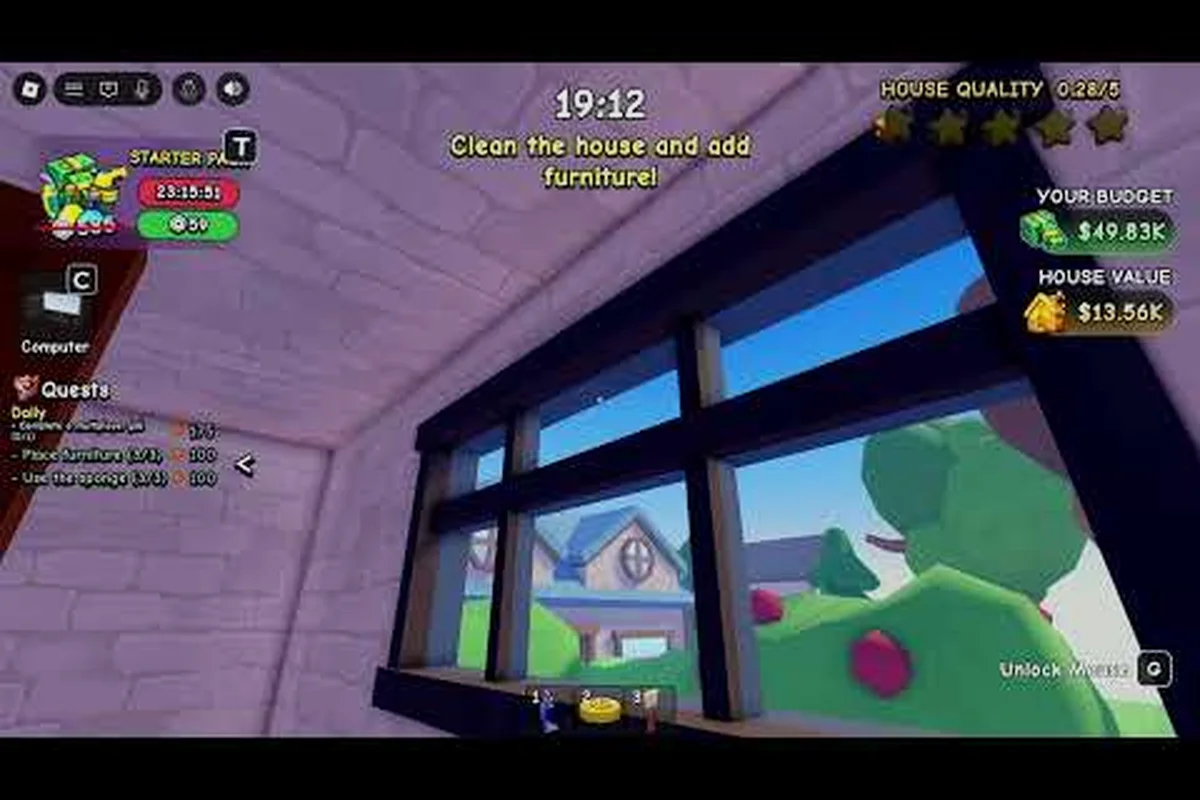
A dirty property in Flip a House can tank your sale price before a single buyer walks through the door. The flip a house scrubber is the fastest way to strip away grime, mold, and surface stains that vacuums leave behind, which means you can list sooner and pocket a larger profit. Understanding which scrubber tier to use, and when to pair it with a vacuum, separates profitable flippers from players stuck scrubbing the same wall for ten minutes.
Scrubber Tiers and Unlock Progression
The scrubber line in Flip a House is not a single tool but a progression of increasingly powerful cleaning devices. Each tier unlocks at a specific level and pairs with a matching vacuum tier, so your cleaning speed scales as you move into larger, dirtier properties. Community testing shows that skipping scrubber upgrades while pushing into mid-game houses creates a bottleneck where mold and stains take twice as long to clear.
| Scrubber Tier | Unlock Level | Paired Vacuum | Best Use Case |
|---|---|---|---|
| Smile Scrubber | 3 | Pro Vacuum | Starter homes, light dirt |
| Scrub Sponge | 6 | Turbo Vacuum | Moderate stains, small mold patches |
| Electric Scrubber | 9 | Plasma Vacuum | Heavy stains, multi-room mold |
| Crystall Scrubber | 13 | Industrial Vacuum | Large properties, stubborn grime |
| Industrial Scrubber | 17 | Royal Vacuum | End-game flips, full restorations |
The Smile Scrubber is your entry point, and it handles basic dirt well enough for early flips. However, once you encounter flip a house mold that spreads across bathroom tiles or basement walls, the lower tiers start to feel sluggish. Players who rush to the Electric Scrubber at level 9 report a noticeable jump in clear speed, especially on stains that require multiple passes with earlier tools.
How the Scrubber Interacts with Trash and Surface Grime
One common mistake is treating the scrubber as a replacement for trash removal. In Flip a House, flip a house trash such as loose debris, old furniture, and garbage bags must be cleared before you can effectively scrub the surfaces underneath. The scrubber targets embedded grime, not physical objects, so your cleaning order matters more than raw tool power.
A reliable workflow that veteran flippers use looks like this: establish a strict top-to-bottom, dry-to-wet order before the flip a house scrubber ever touches a surface. The reason is mechanical — the scrubber's cleaning radius only affects embedded grime, so any flip a house trash left above your work line will shed dust and debris onto freshly scrubbed areas the moment you move downward. Experienced players treat each room as a four-phase pass: clear, vacuum, scrub, vacuum again. Skipping phase two is the most common failure point, because dry dust mixed with the scrubber's moisture creates a paste that smears flip a house stains deeper into porous surfaces like drywall and unfinished wood. On a standard three-bedroom flip, following this order saves roughly 20–30 minutes of re-cleaning per property, and it prevents the specific bug where flip a house mold patches visually respawn if the underlying debris layer was never removed.
-
Clear all flip a house trash items first, including bags and broken furniture, to expose the underlying floor and wall surfaces.
-
Run a vacuum pass to lift loose dust and debris that would otherwise smear when wet scrubbing begins.
-
Apply the scrubber to flip a house stains and mold patches, working from the top of the wall downward to avoid re-soiling cleaned areas.
-
Finish with a final vacuum sweep to collect any residue the scrubber loosened but did not remove.
This sequence prevents the frustrating loop where a stain reappears because loose dirt from above dripped down after you scrubbed. According to community reports, players who reverse the order spend roughly 30% more time per room, which adds up quickly across a five-room flip.
Mold, Stains, and Cobwebs: What the Scrubber Actually Clears
Not every blemish in Flip a House responds to the same tool. The scrubber excels at flip a house mold and flip a house stains, while flip a house cobwebs often require a different approach depending on their placement. Understanding which surface type you are dealing with helps you avoid wasting time on ineffective passes.
| Surface Problem | Scrubber Effective? | Notes |
|---|---|---|
| Wall mold | Yes, high | Clears in 2-3 passes with Electric tier or higher |
| Floor stains | Yes, medium | Requires multiple angles; vacuum residue after |
| Ceiling cobwebs | No, low | Use a brush or vacuum attachment instead |
| Corner cobwebs | Partial | Scrubber can reach low corners but misses high angles |
| Pest residue | Yes, after pest removal | Scrubber cleans the mess, not the pest itself |
Flip a house pests add another layer to the cleaning puzzle. The scrubber does not remove live pests, but it does clean the residue and stains they leave behind. Players dealing with pest-heavy properties should clear the pests first, then use the scrubber to restore surfaces that were marked or soiled. The Crystall Scrubber at level 13 becomes particularly valuable here because it handles the larger stain areas that pest activity tends to create.
Scrubber vs. Vacuum: When to Use Each Tool
The game gives you both a vacuum and a scrubber for a reason, and the two tools serve distinct roles. A vacuum lifts loose particles and trash remnants, while the scrubber breaks down stuck-on grime that a vacuum cannot pull free. Players who try to use only one tool inevitably hit a wall where the other is required.
| Task | Best Tool | Why |
|---|---|---|
| Loose dust and dirt | Vacuum | Fast pickup, wide area |
| Embedded wall grime | Scrubber | Breaks surface bond |
| Wet stains | Scrubber | Vacuum cannot lift wet residue |
| Cobwebs | Vacuum or brush | Scrubber misses high angles |
| Post-scrub residue | Vacuum | Collects loosened particles |
The flip a house scrubber shines when you face a property that has sat neglected for a long time. In those houses, a vacuum pass leaves behind visible staining that drags down the House Quality score, which directly affects buyer offers. Pairing a Turbo Vacuum with a Scrub Sponge at level 6 gives you a balanced kit for mid-tier flips, while end-game players lean on the Industrial Scrubber and Royal Vacuum combo for maximum speed.
Optimizing Your Cleaning Route for Faster Flips
Speed matters in Flip a House because every minute spent cleaning is a minute you are not listing the property and collecting a buyer offer. A well-planned route through the house reduces backtracking and ensures you never scrub a surface twice. The most efficient flippers treat cleaning as a layered process rather than a room-by-room free-for-all.
Consider this route structure for a typical two-story flip: a top-down sequence that pairs the flip a house scrubber with targeted trash, mold, and stain passes so each floor is fully cleared before you descend. For example, if you scrub the upstairs bathroom first and then vacuum the hallway, you avoid dragging loosened flip a house mold spores across drywall and carpet fibers that would otherwise need a second pass. The scrubber's spray pattern covers roughly a single tile width per activation, so hugging baseboards and working corner-to-drain keeps dirty runoff moving toward the stairwell instead of pooling on finished lower surfaces. This layered sequencing also prevents flip a house stains from soaking into grout while you are still clearing debris overhead, which is the main reason random room hopping inflates total cleaning time.
-
Start upstairs and clear all flip a house trash from bedrooms and bathrooms, working toward the staircase.
-
Vacuum each room immediately after trash removal to capture dust before it spreads to cleaned areas.
-
Scrub mold and stains in the upstairs bathroom first, since bathrooms tend to have the highest concentration of flip a house mold.
-
Move downstairs and repeat the trash-then-vacuum pattern before scrubbing kitchen and living room surfaces.
-
Finish with flip a house cobwebs in corners and ceiling edges, using a vacuum attachment where the scrubber cannot reach.
This top-down approach prevents dirty water and loosened grime from dripping onto already-cleaned lower floors. Community testing suggests that a structured route can cut total cleaning time by up to 20% compared to random room hopping, which translates to faster listings and more flips per play session.
Upgrading Your Scrubber Efficiently
Upgrade tokens are scarce in Flip a House, so spending them on the right scrubber tier at the right time matters. The upgrade token guide explains how to farm tokens reliably, but the short version is that you should prioritize scrubber upgrades only when your current tier starts to feel slow on the properties you are flipping.
A common progression pattern looks like this, and it follows the grime density curve of the properties you unlock: early flips rarely spawn more than one flip a house stains patch per room, so a low-tier scrubber clears everything in a single pass, but once flip a house mold starts layering onto bathroom tiles and kitchen counters around level 6, the two-pass threshold becomes the clearest signal that your current scrubber is falling behind your cleaning route.
-
Levels 1-5: Stick with the Smile Scrubber and invest tokens in vacuum upgrades first, since early houses have light grime.
-
Levels 6-8: Upgrade to the Scrub Sponge when you start seeing flip a house stains that require more than two passes.
-
Levels 9-12: The Electric Scrubber becomes essential as mold patches grow larger and more frequent.
-
Levels 13-16: The Crystall Scrubber is a strong investment for players flipping larger properties with heavy pest residue.
-
Level 17+: The Industrial Scrubber is the end-game goal, but only after your vacuum is already at Royal tier.
The scrub sponge guide breaks down the specific costs and unlock requirements for each tier, which helps you plan token spending without wasting resources on sidegrades. Players who upgrade the scrubber too early often find themselves token-starved when a critical vacuum upgrade becomes available.
Habits That Waste Your Scrubber Time
Even seasoned flippers misjudge how the scrubber interacts with the house's grime state, especially when mold has already spread across multiple rooms. For example, scrubbing a wall before clearing trash from the same room lets debris and stain particles re-settle on the surface you just cleaned, forcing a second pass that burns extra time and reduces your effective profit per hour. The same logic applies to working bottom-up: upper-floor grime drips or falls onto lower surfaces after you scrub them, so a top-down route is not just faster—it prevents the House Quality score from dropping again before the final inspection. Recognizing these traps keeps your cleaning loop predictable across starter homes and later properties with heavier pest and mold density.
| Mistake | Result | Fix |
|---|---|---|
| Scrubbing before trash removal | Stains reappear from debris | Clear trash first, always |
| Using scrubber on cobwebs | Slow, incomplete removal | Switch to vacuum or brush |
| Ignoring post-scrub residue | House Quality stays low | Final vacuum pass after scrubbing |
| Skipping scrubber upgrades | Mold takes 2x longer | Upgrade at level 6 and 9 minimum |
| Cleaning bottom-up | Upper grime re-soils lower floors | Always work top-down |
The what to clean first guide covers the optimal starting point for any property, which pairs well with the scrubber-specific advice here. Avoiding these five mistakes keeps your cleaning loop tight and your profit margins healthy.
Frequently Asked Questions
Does the flip a house scrubber remove trash?
No, the scrubber only removes embedded grime, mold, and stains from surfaces. You must clear flip a house trash items like garbage bags and broken furniture first, then scrub the exposed surfaces underneath. Skipping trash removal causes stains to reappear because debris falls back onto cleaned areas.
Which scrubber tier is best for mold?
The Electric Scrubber at level 9 is the first tier that clears flip a house mold efficiently, handling most patches in two to three passes. For larger mold spreads in end-game properties, the Crystall Scrubber at level 13 offers noticeably faster clear speed and wider coverage per pass.
Can the scrubber clean cobwebs?
The scrubber is not effective on flip a house cobwebs, especially ceiling and high-corner cobwebs. Use a vacuum attachment or brush for cobweb removal instead. The scrubber can reach low corner cobwebs partially, but it is not the right tool for the job.
Do I need to remove pests before scrubbing?
Yes, flip a house pests must be removed before you scrub the surfaces they soiled. The scrubber cleans pest residue and stains but does not remove live pests. Clear the pest problem first, then use the scrubber to restore the affected surfaces to a clean state.
Is the scrubber better than the vacuum?
Neither tool replaces the other. The vacuum lifts loose dust and debris, while the scrubber breaks down stuck-on grime that a vacuum cannot pull free. The most efficient flippers use both tools in sequence: vacuum first, scrub second, then vacuum again to collect loosened residue.